
Ontario winters punish whatever was left for “next weekend.” Gutters full of leaves send meltwater over the edge and against the foundation. An outdoor tap that still holds water can freeze and split. A furnace that missed its tune-up tends to quit on the coldest night of January.
This fall home maintenance checklist covers what matters most for houses and cottages across the GTA, Simcoe County and Southern Georgian Bay. Most of it is a weekend of work. Some of it is better handed to licensed trades.
Outside: deal with water before it freezes
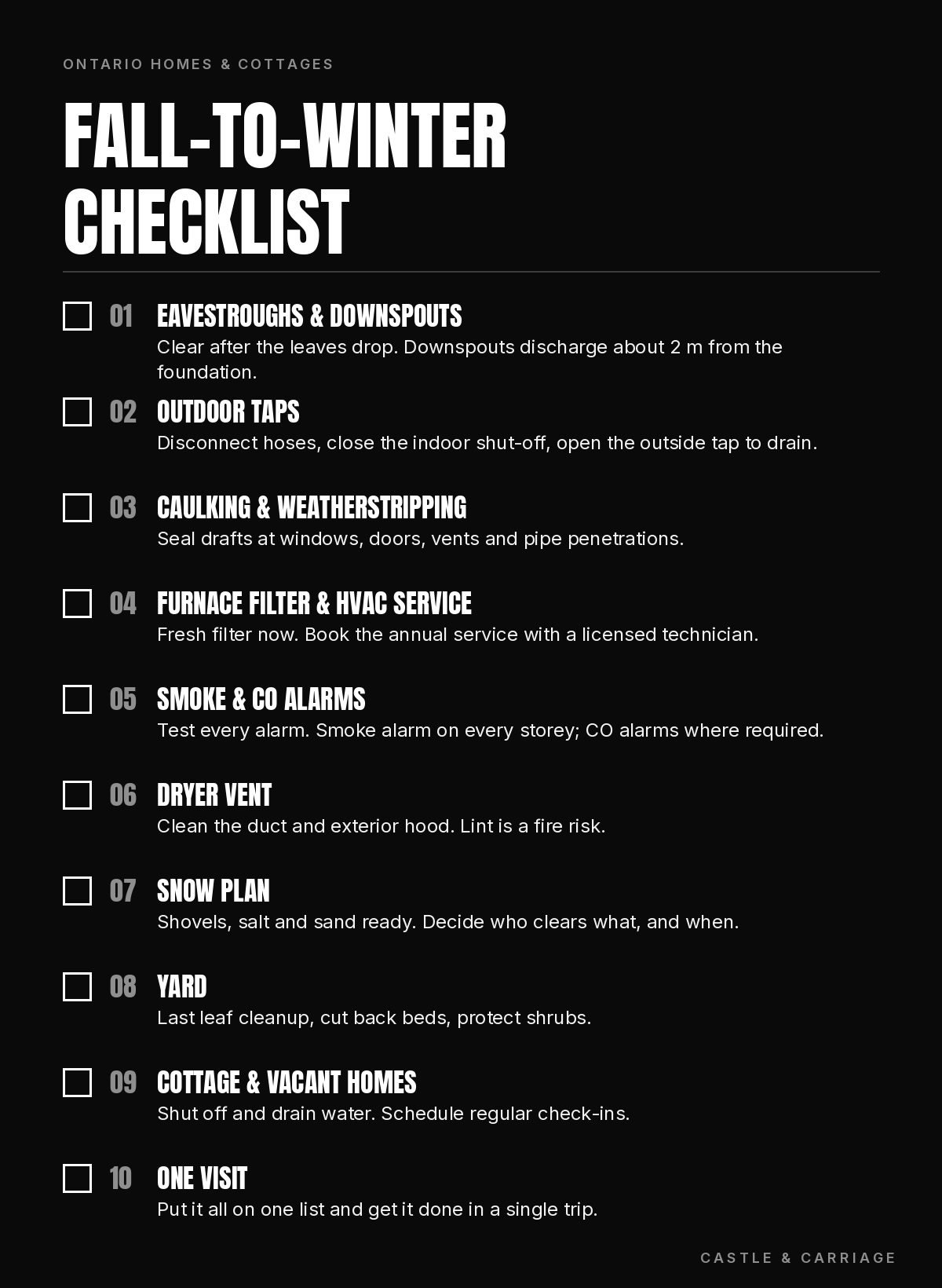
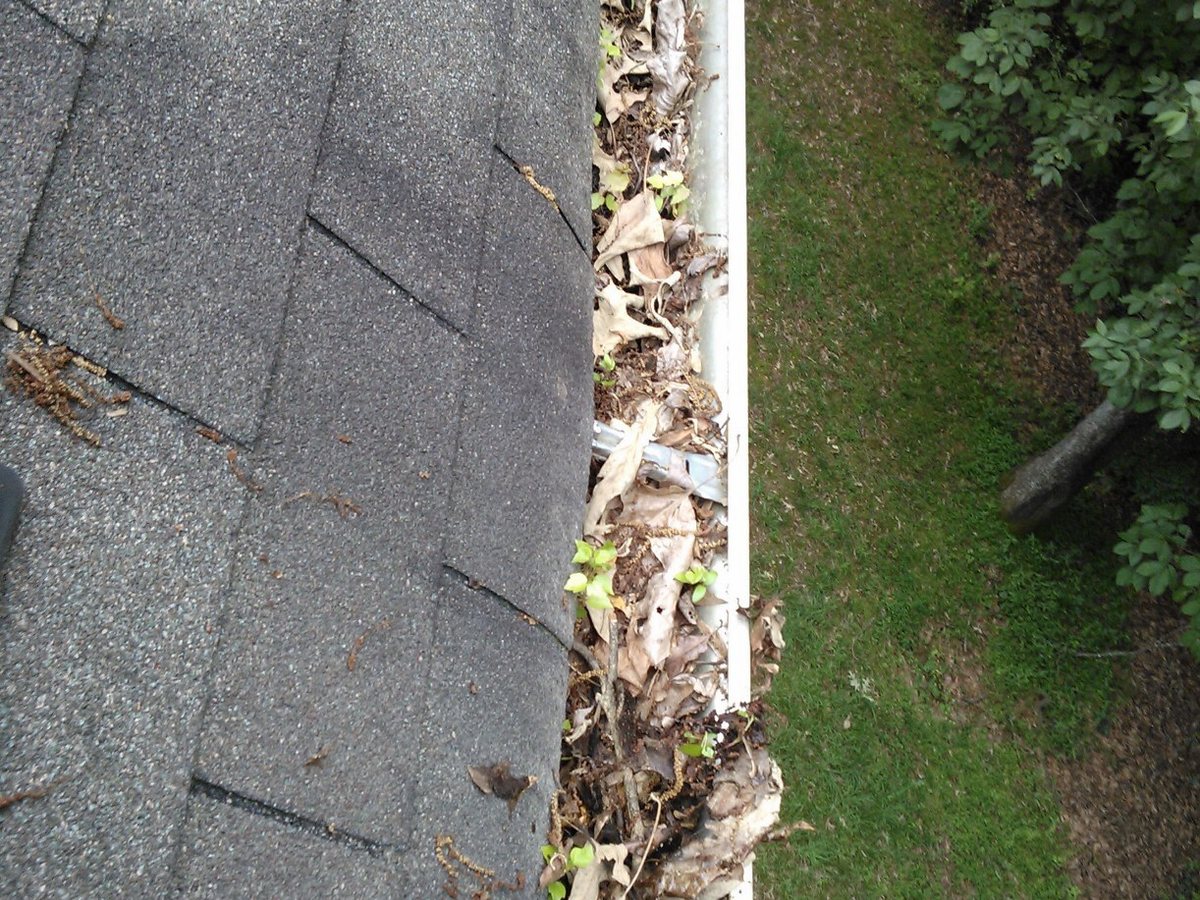
1. Clean eavestroughs and check downspouts
Wait until most of the leaves have dropped, then clear the troughs and flush the downspouts. Make sure each downspout discharges away from the house. The City of Toronto suggests draining water about 2 metres from the foundation, without sending it onto a neighbour’s property or pooling it on a sidewalk or driveway where it can freeze.
2. Shut off and drain outdoor taps
Disconnect and store garden hoses. Then close the indoor shut-off valve for each outdoor tap and open the tap outside to let it drain. The City of Toronto’s frozen pipe guidance lists this as one of the first steps. While you are at it, insulate any pipes in unheated spaces like crawlspaces and garages. The city recommends keeping pipes above 8°C.
3. Seal drafts
Walk the outside with a caulking gun. Look at window and door trim, dryer and exhaust vents, and anywhere a pipe or cable goes through the wall. Replace worn weatherstripping on exterior doors. It is cheap, it is quick, and it is one of the easiest ways to keep cold air off your pipes.
4. Look at the grading
Soil beside the foundation settles over time. If the ground now slopes toward the house, or there are low spots where water sits after rain, note them. Topping up and regrading is a fall job. In spring it is a mud job.
Inside: heat, air and safety
5. Furnace filter and HVAC service
Put in a fresh filter now and check it monthly through the heating season. Book the annual furnace or boiler service with a licensed technician before the first cold snap, when schedules fill up.
6. Test smoke and carbon monoxide alarms
Ontario law requires a working smoke alarm on every storey and outside all sleeping areas. If your home has a fuel-burning appliance, a fireplace or an attached garage, you also need carbon monoxide alarms next to sleeping areas. As of January 1, 2026, you need one on every storey too. Test them all, replace batteries, and check the expiry date printed on each unit.
7. Clean the dryer vent
Pull the dryer out, clean the duct and clear the exterior hood. Lint build-up is a fire risk and makes the dryer work harder. If the hood flap sticks open, replace it before it lets in cold air and pests.
Yard and snow
8. Final leaf cleanup and bed prep
Rake or mulch the last of the leaves, cut back perennials, and wrap or stake shrubs that tend to get crushed by snow piles. Clear drainage swales and catch basins so meltwater has somewhere to go.
9. Make a snow plan
Have shovels, salt and sand ready before the first storm, not after it. Decide who clears the driveway, walkways and steps, and when. If the house is empty for stretches, arrange clearing anyway. A snowed-in driveway tells everyone nobody is home.
Cottages and homes that sit empty
If you close a cottage or a second home for the season, the stakes go up. Nobody is there to notice a dripping pipe or a furnace fault.
- Shut off the main water supply and drain the lines if the building won’t be heated.
- If it stays heated, set a sensible minimum temperature and protect pipes in exterior walls.
- Clear eavestroughs, secure outdoor furniture and check the roof for loose shingles before snow load arrives.
- Schedule regular check-ins over the winter, especially after big storms and deep freezes.
Put it all on one list
None of these jobs is hard on its own. The trouble is the number of them, and that they all land in the same few weeks. Our Maintenance service is built for this. You keep a running Service List and we handle it in one monthly visit, working through high, medium and low priorities in order. Heating, plumbing and electrical items go to licensed techs through our Mechanical service.
Eavestrough and dryer-vent cleaning, snow clearing and check-ins on vacant or seasonal properties are all part of Maintenance. Bigger exterior repairs like caulking and sealing fall under Exterior. Leaf cleanup, bed prep and grading fall under Landscaping.
Get your fall list handled
Send us your list and we’ll confirm within one business day. Our hours are Monday to Friday, 8am to 5pm. We serve the GTA, Simcoe County and Southern Georgian Bay.
Start a service request or ask us about ongoing maintenance.
Featured photo: Azmar Aso / Unsplash.