A damp corner after a storm, a puddle by the floor drain, a musty smell that won’t go away. When a basement leaks after rain, most people look at the basement first. In many Ontario homes, though, the water is coming from outside, from a downspout, a low spot in the yard or a crack in the parging. Those are often the cheapest fixes, and the right place to start.
First, figure out where the water is coming from
Before you fix anything, watch what happens during the next heavy rain. A few questions narrow it down quickly:
- Where is the water showing up? A single wet spot low on one wall, often below a downspout or a low patch of ground, points to surface water. Water coming up through the floor or at the joint between floor and wall can mean groundwater or a drainage problem.
- When does it happen? Water that appears only during heavy rain or snowmelt usually traces back to eavestroughs, downspouts and grading.
- Is it the sewer? Water backing up through a floor drain during a storm is a different problem. It’s a sewer backup, and it needs a licensed plumber.
Step 1: eavestroughs and downspouts
A roof sheds a lot of water in a storm. If the eavestroughs are clogged, it pours over the edge right beside the foundation. If the downspouts empty at the base of the wall, it soaks straight into the backfill.
- Clean the eavestroughs and make sure they slope toward the downspouts.
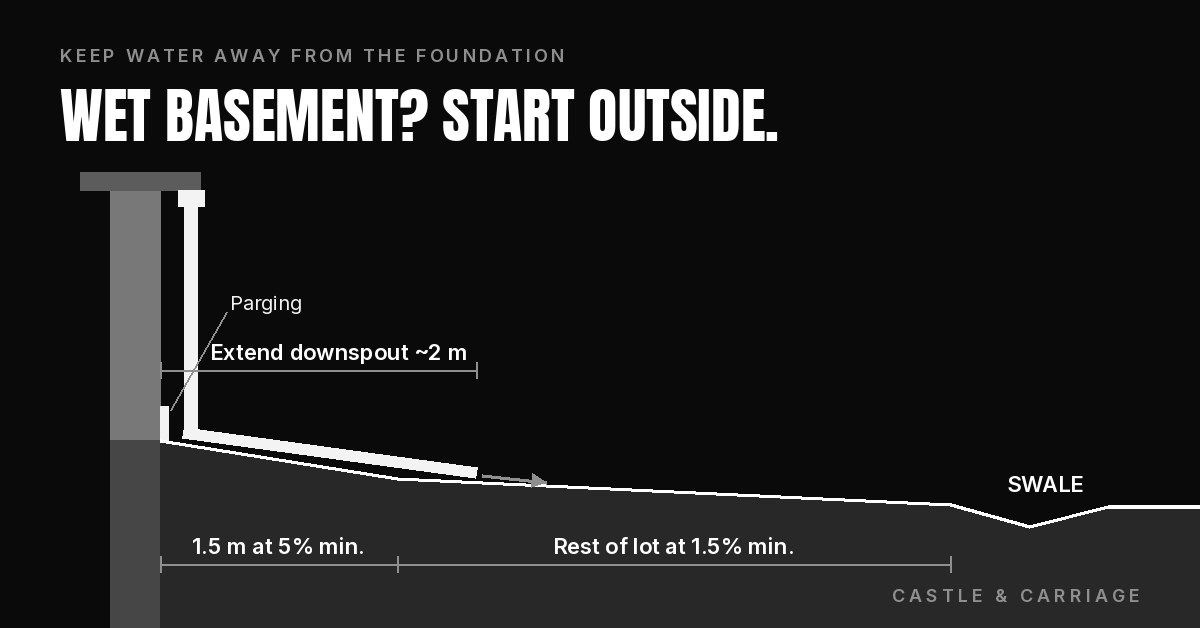
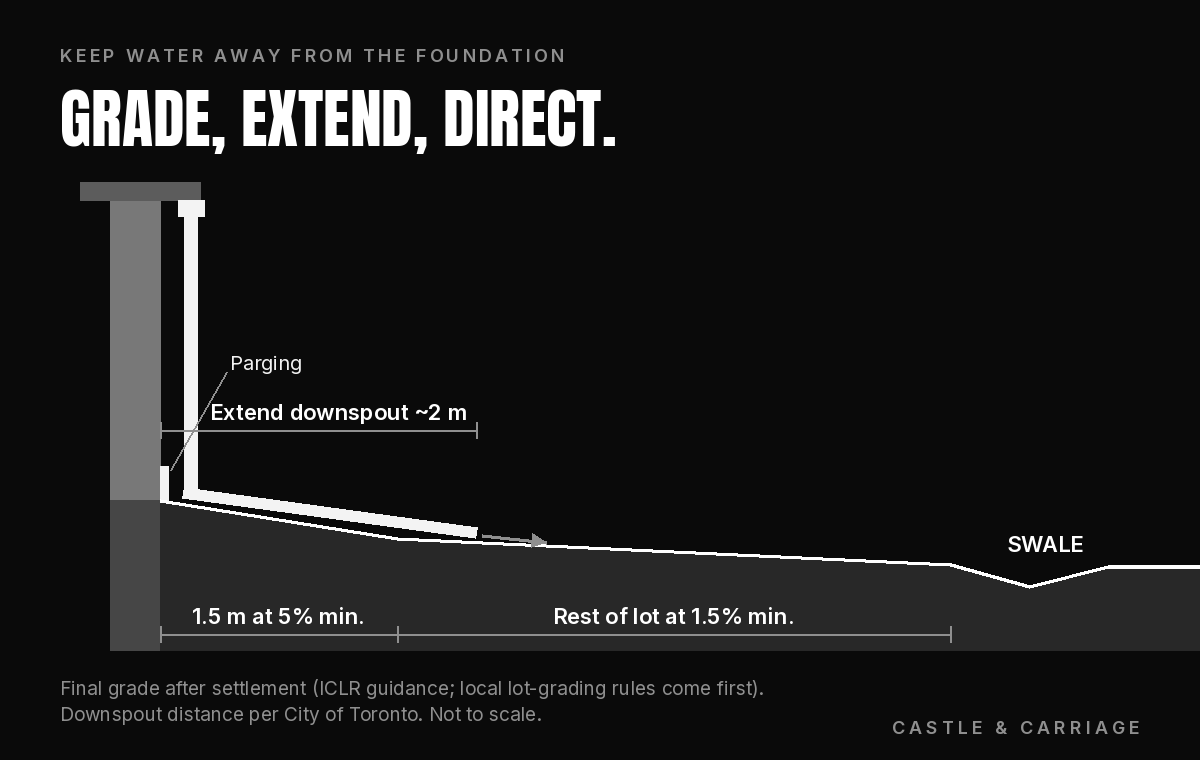
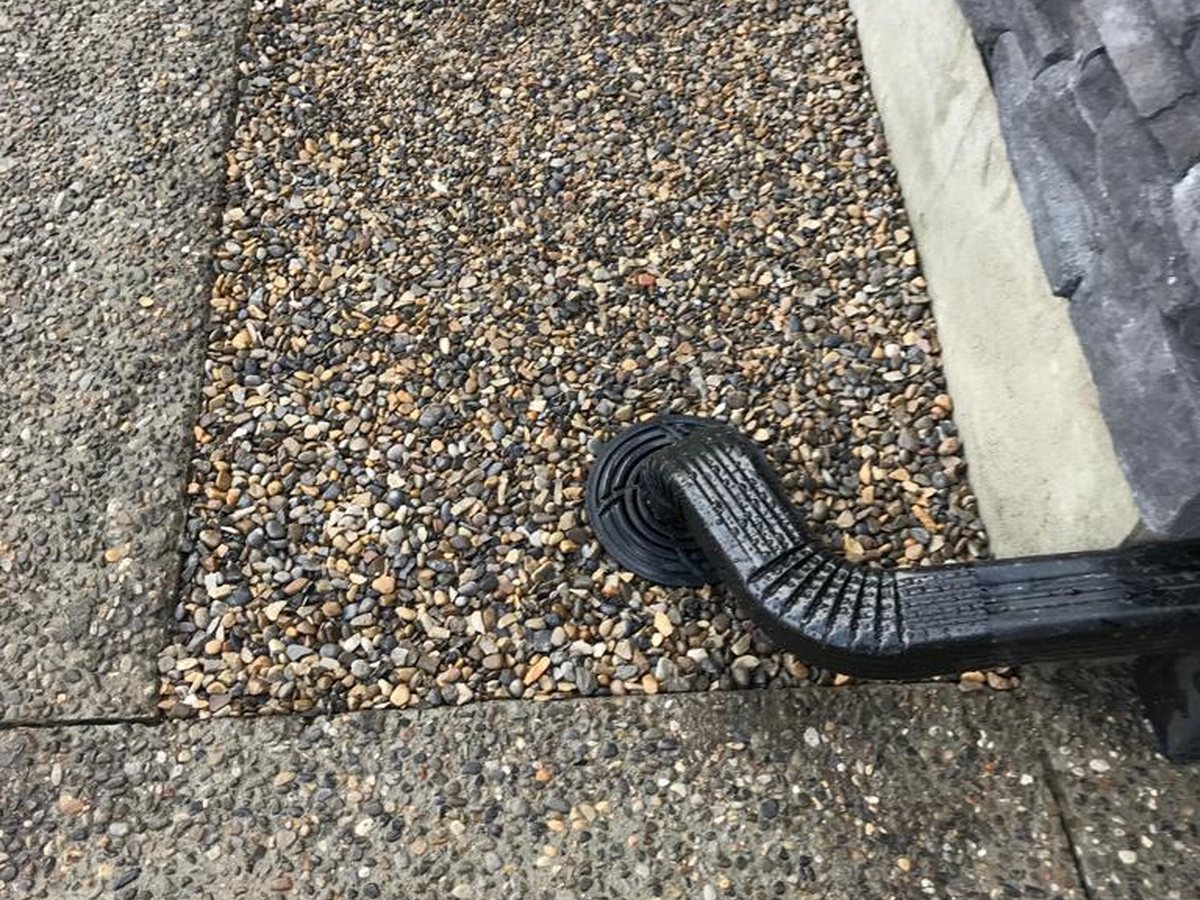
- Extend each downspout so it discharges well away from the house. The City of Toronto recommends about 2 m from the foundation, onto ground that slopes away. Don’t send it onto a neighbour’s property or a walkway where it can freeze.
- If your downspouts are connected to the sewer or weeping tile, check your municipality’s rules. Toronto, for example, encourages disconnection where it can be done safely.
Step 2: grading
The ground around your house should slope away from it. Backfill beside a foundation settles for years after construction, and gardens, patios and additions change the grade over time. A yard that drained well when the house was built may now tip water back toward the walls.
The Institute for Catastrophic Loss Reduction (ICLR) recommends these targets in its homeowner flood protection guide:
- At least 5% slope away from the house for the first 1.5 m, measured after the soil settles. That’s a drop of about 7.5 cm over 1.5 m.
- At least 1.5% across the rest of the lot, directing water to swales or the street.
- Patios and walkways sloping away from the house at 1% or more.
- Downspouts discharging beyond the backfill zone, not into it.
Fixing grading usually means adding and compacting clean fill against the foundation, then topsoil and sod or planting beds. Keep the finished grade below siding and window sills. Swales, the shallow channels between houses, need to stay clear of fences, sheds and garden edging that block the flow.
Step 3: parging and foundation cracks
Parging is the cement coating on the exposed part of a foundation wall above grade. When it cracks, spalls or falls away, water gets behind it, freezes and does more damage each winter. It isn’t a waterproofing membrane, but it protects the wall and sheds splash and runoff.
- Look for cracks, hollow-sounding patches and missing sections, especially under downspouts and near hose bibs.
- Repair parging in mild weather so it can cure properly before frost.
- Seal gaps where pipes, vents and wires pass through the wall.
- Check window wells. They should have drainage, be clear of leaves and, ideally, be covered.
Cracks that leak, widen or run through the wall are a different job from cosmetic parging. They need to be assessed and repaired from the inside or outside, depending on the cause.
When it’s more than surface water
If the outside is in good shape and water still comes in, the problem may be the weeping tile, hydrostatic pressure or the sewer connection. The City of Toronto recommends a licensed plumber for backwater valves and sump pumps. It also offers a basement flooding protection subsidy of up to $6,650 for eligible work. Many other Ontario municipalities run similar programs, so check yours before you hire.
How we can help
Most of the outside work falls across a few of our services. Exterior covers eavestroughs, downspout extensions, parging and sealing. Landscaping covers regrading, swales and restoring beds and sod afterward. Plumbing items go to the licensed techs on our Mechanical team. Everything is done by in-house crews, with a written quote and warranty.
Not sure where the water is coming from? Book an estimate. The $200 estimate fee is credited back when you approve the contract. We serve the GTA, Simcoe County and Southern Georgian Bay. Emergency and same-day response is available.
Dry it out from the outside in
Request an exterior drainage assessment or ask about regrading.